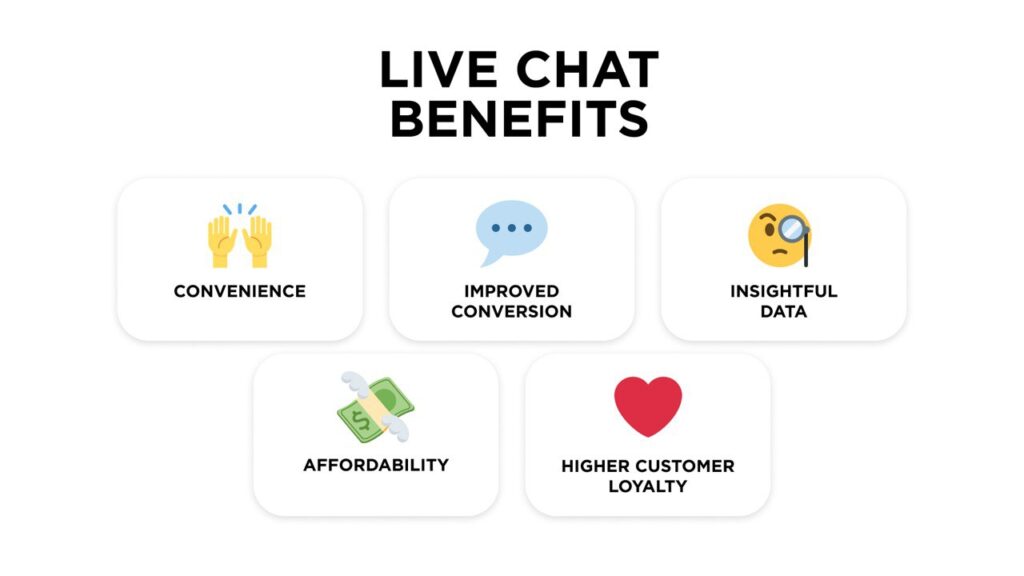

In today’s fast-paced digital marketplace, customers expect instant, helpful answers without long hold times or complicated phone menus. Live chat sits at the intersection of convenience and personal service, letting businesses respond directly on their website or app. The benefits of live chat support extend beyond speed; they include improved satisfaction, higher conversions, and better insights into customer needs. For a deeper look, see the the benefits of live chat support in action across industries.
Speed matters when a shopper asks a product question, a visitor reports a technical issue, or a prospective buyer wants to compare options. Live chat makes it possible to respond within seconds, not minutes, which reduces frustration and keeps people engaged. When agents can resolve a concern on the spot, the likelihood of abandoning a purchase drops, and you protect your brand from negative experiences that spread quickly on social media.
Cost efficiency is another clear benefit. Compared with phone support, live chat reduces the average handling time per inquiry and enables a single agent to assist multiple visitors at once. This scalability translates into lower operating costs, especially during peak hours or seasonal spikes. With chat, you can deploy automation for routine questions while reserving human agents for complex problems, preserving both speed and a personal touch.
Beyond cost, live chat provides rich data that informs product development, marketing, and service improvements. Each chat interaction yields insights about user intent, objections, and common questions. When integrated with a customer relationship management (CRM) system or help desk software, chat becomes a powerful feedback loop. Teams can tailor messaging, update FAQs, and train agents to recognize cues that signal churn risk or upsell opportunities.
Proactive engagement is another strategic edge. By greeting visitors based on behavior or source, a live chat window can offer relevant content, guide users through complex checkout flows, or remind them about an abandoned cart. This proactive approach reduces friction and demonstrates attentiveness, which in turn drives loyalty and repeat business. It also supports a multilingual audience when the right chatbot or translator is in place.
How you implement matters as much as what you offer. Start with a clear use case, define service level targets (SLAs), and choose a chat platform that integrates with your existing tools. Train agents to balance empathy with efficiency, set up canned responses for common questions, and create escalation paths for complex issues. Measure success with first contact resolution, customer satisfaction scores, and average handle time, then iterate based on findings.
To explore more resources on customer experience, visit the NewsDest homepage.
Choosing the right live chat solution
When evaluating tools, look for seamless website integration, mobile-friendly interfaces, and options for automation with smooth human handoffs. Consider chat widgets that adapt to your branding, offer canned responses, and support traffic spikes. Security and compliance matter, especially for handling personal data or payment details; choose providers with encryption, access controls, and data retention policies. An important decision is whether to use a purely automated chatbot, live agents, or a hybrid approach that escalates to humans when needed.
Measuring success and continuous improvement
Develop a dashboard that tracks key performance indicators such as first response time, average resolution time, customer satisfaction (CSAT) scores, and net promoter score (NPS). Regularly review chat transcripts to identify gaps in knowledge or tone. A well-structured knowledge base improves agent efficiency and self-service options for customers. Remember that user experience is as important as speed: a clipped, friendly, and confident chat experience reinforces trust and encourages repeat business.