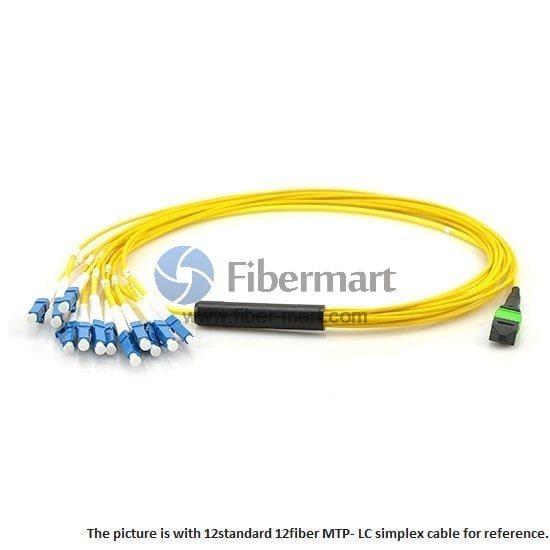

In today’s high-speed digital world, data centers are the backbone of enterprises, cloud providers, and telecom networks. One of the most crucial components ensuring smooth data flow is the fiber optic cabling system. Among the many cabling solutions, the LC to MPO cable has become a standard for high-density and high-performance environments. This guide will help you understand the essentials of selecting LC to MPO cables for modern data centers.
Understanding LC to MPO Cables
LC to MPO cables are hybrid fiber optic cables that feature LC connectors on one end and MPO connectors on the other. LC connectors are small form-factor connectors widely used for their compact size and reliable performance, while MPO connectors support multi-fiber connections, making them ideal for high-density installations. This combination allows data centers to efficiently transition from single-fiber connections to multi-fiber setups, facilitating faster deployment and simplified cable management.
These cables are commonly used in backbone and horizontal cabling, connecting high-performance switches, servers, and patch panels. They are essential in supporting high-speed network standards such as 40G, 100G, and beyond. Choosing the right LC to MPO cable ensures low signal loss, minimal insertion loss, and high reliability across your data center network.
Key Factors in LC to MPO Cable Selection
When selecting an LC to MPO cable, several factors need consideration to ensure optimal performance:
Fiber Type
LC to MPO cables are available in single-mode and multimode fibers. Single-mode fibers support long-distance transmission and are suitable for inter-data center connections. Multimode fibers are ideal for shorter distances, typically within a data center, and support high-speed protocols like 40G and 100G Ethernet. For modern data centers, multimode LC to MPO cables are frequently preferred due to their cost-effectiveness and high bandwidth capabilities.
Connector Type and Polarity
MPO connectors can be configured as male or female, and proper polarity is critical to ensure correct signal transmission. There are different MPO polarity options such as A, B, and C, each suited for specific applications and transceiver compatibility. LC connectors typically come in standard duplex formats. Understanding the polarity and connector type is essential to avoid misalignment and signal errors.
Cable Structure and Jacket Type
The physical construction of LC to MPO cables plays a significant role in durability and flexibility. Indoor-rated cables are suitable for data center racks and pathways, while armored cables provide protection against physical damage, rodent attacks, and harsh environments. Fiber-Mart offers a range of LC to MPO cables with robust jackets, ensuring longevity in demanding data center conditions.
Insertion Loss and Return Loss
Low insertion loss and high return loss are critical metrics for network efficiency. Insertion loss refers to the signal power loss during transmission, while return loss measures the reflected signal. Quality LC to MPO cables from Fiber-Mart are engineered to minimize these losses, ensuring reliable high-speed data transmission.
Cable Length and Deployment
Selecting the correct cable length is essential for both performance and neatness in your data center. Excessively long cables can create clutter and increase signal loss, while too-short cables may limit flexibility during upgrades or maintenance. Fiber-Mart provides a wide range of pre-terminated LC to MPO cables in various lengths, allowing for precise deployment planning.
Benefits of Using LC to MPO Cables
Implementing LC to MPO cables in modern data centers offers several advantages:
- High Density: MPO connectors consolidate multiple fibers into a single connector, reducing the space required in racks and patch panels.
- Fast Deployment: Pre-terminated LC to MPO cables simplify installation and reduce labor costs.
- Future-Proofing: These cables support emerging high-speed standards, making them suitable for network upgrades.
- Enhanced Performance: Low insertion and return loss ensures reliable, high-speed data transmission.
- Flexible Configurations: Available in single-mode, multimode, and various polarity options to meet different network designs.
Choosing Fiber-Mart LC to MPO Cables
Fiber-Mart provides a comprehensive selection of LC to MPO cables tailored for modern data centers. Their products are engineered for high-performance, reliability, and ease of installation. Here are some tips for selecting the right Fiber-Mart LC to MPO cable:
- Assess Network Speed Requirements: Match the cable type (single-mode or multimode) with your network speed, whether it is 10G, 40G, 100G, or higher.
- Determine Connector Polarity: Verify the MPO connector polarity to ensure proper alignment with existing infrastructure.
- Consider Environmental Factors: Choose armored cables for areas prone to physical stress or potential damage.
- Select Appropriate Lengths: Measure the distance between devices to avoid excess slack or tension.
- Check Fiber Quality: Fiber-Mart cables are made with high-quality optical fibers to ensure minimal loss and maximum performance.
Installation Best Practices
Proper installation of LC to MPO cables is crucial for performance and longevity:
- Avoid Tight Bends: Fiber optic cables are sensitive to bending; maintain the recommended bend radius to prevent signal loss or damage.
- Label Cables Clearly: Use color-coded or numbered labels for easy identification and maintenance.
- Secure Cable Management: Use trays, racks, and ties to prevent tangling and reduce stress on connectors.
- Regular Inspection: Periodically inspect cables for dust, dirt, or physical damage. Cleaning LC and MPO connectors before insertion improves signal quality.
Conclusion
LC to MPO cables are essential components in modern data centers, enabling high-density, high-speed, and scalable network connections. Selecting the right LC to MPO cable involves considering fiber type, connector polarity, cable structure, and deployment requirements. Fiber-Mart offers a wide range of LC to MPO cables designed to meet the performance and reliability demands of today’s data centers. By carefully planning and selecting the appropriate cables, data center managers can ensure efficient network performance, reduce maintenance challenges, and future-proof their infrastructure.
Using LC to MPO cables not only simplifies cabling but also supports the rapid evolution of modern data centers, making them a critical investment for businesses aiming to stay ahead in a fast-paced digital environment.