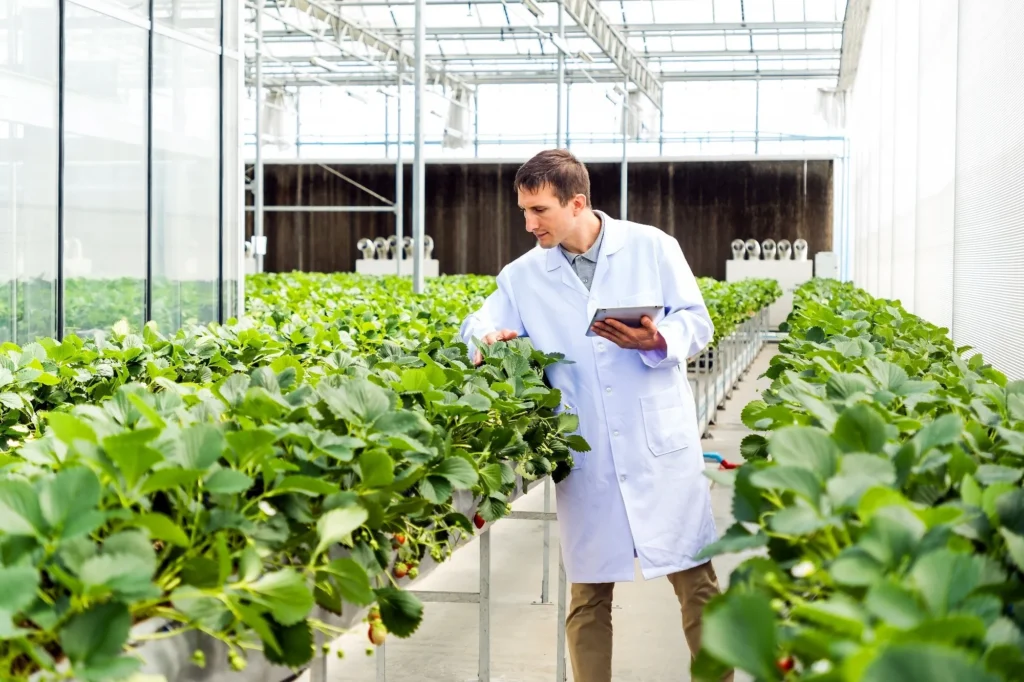

Across continents, public and private sectors are reimagining how crops are developed, grown, and delivered to markets. The push to feed a growing population amid climate volatility has turned labs into strategic assets. In agritech, lab spaces—whether compact pilot facilities or sprawling research campuses—support disciplines from genomics to soil science, from bioprocessing to data analytics. These spaces aren’t just places to test seeds; they are ecosystems where researchers simulate real-world conditions, monitor microclimates, and translate complex data into actionable steps. The outcome is faster, more predictable crop performance, reduced resource use, and new pathways for local and regional food production. In short, they are a backbone for resilient supply chains that can withstand shocks while keeping prices stable for consumers.
Lab spaces central to this transformation combine hardware and software: programmable climate rooms, precision lighting, automated irrigation, phenotyping bays, and high-throughput screening platforms. When paired with sensors and AI, they become living laboratories that model plant responses under drought, heat, or nutrient stress. Tissue culture and fermentation suites enable rapid multiplication of elite varieties and microbial partners that boost yields or protect against pests. The result is not just more food, but better food produced with fewer inputs—lower water footprints, less chemical waste, and improved soil health over time. For stakeholders, the value lies in risk reduction: pilots that fail slowly, data that informs scalable decisions, and IP secured through rigorous lab work.
Understanding how agritech lab spaces are powering the future of global food systems requires looking at the pipeline from discovery to deployment. Breeding programs inside these labs shorten the cycle from years to months, allowing researchers to test thousands of genetic variants and nutritional profiles in controlled conditions before field trials. Gene editing, CRISPR-based improvements, and microbiome engineering are moving from concept to commercialization, with regulatory frameworks gradually aligning to support safe, transparent innovation. Beyond crop genetics, bioprocess labs research alternative proteins and fermentation-based ingredients, expanding the menu of sustainable options. All these strands converge in lab spaces that standardize data, enable reproducibility, and foster cross-disciplinary collaboration among plant scientists, data scientists, and agronomists.
Public-private partnerships and investor interest are recognizing the strategic importance of well-designed agritech lab spaces. They are not luxuries but essential infrastructure for a secure food future. Governments are funding climate-resilient research, universities are expanding accelerator models, and startups are building modular labs that scale with demand. For farmers, this means access to robust varieties and agricultural practices that are tuned to local soils and climates, reducing volatility in yields and prices. For urban centers, lab-enabled innovation feeds vertical farms and rooftop systems that shorten supply chains and bring fresher produce closer to consumers.
Global collaboration and standards: In a sector where data quality and reproducibility matter, evidence from agritech lab spaces is increasingly shared across borders. Research consortia and open-data initiatives help standardize experimental protocols, benchmark results, and accelerate the adoption of successful practices. Shared platforms for phenotyping, transcriptomics, and agronomic metadata reduce duplication of effort and lower the barriers for smallholder farmers to participate in innovation. When labs adopt common data models and reporting formats, regulators and buyers can trust the outputs, enabling faster commercialization of new varieties and ingredients. This collaborative model also supports capacity building in developing regions, where skilled technicians and modern lab infrastructure may be scarcer. By pooling resources and expertise, global food systems become more resilient to shocks and better able to translate laboratory breakthroughs into tangible benefits at the farm gate, in markets, and in kitchens worldwide.
For more insights on market trends and investment opportunities, visit the InvestBout homepage.