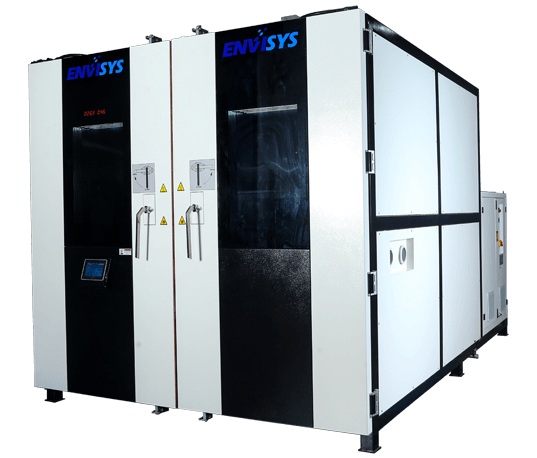

Research and development teams often need to understand how products perform under conditions that cannot be easily recreated in ordinary laboratories. Changes in atmospheric pressure, temperature, humidity, and oxygen availability can significantly affect equipment, materials, electronics, and mechanical systems. An altitude test chamber provides a controlled environment where these conditions can be simulated and studied safely and repeatedly.
An altitude test chamber is designed to reproduce atmospheric conditions associated with different elevations. By controlling pressure and, in many systems, temperature and humidity, researchers can evaluate how a product responds to reduced atmospheric pressure. This makes the technology valuable across aerospace, automotive, electronics, defense, telecommunications, medical equipment, and other industries where environmental reliability is important.
Understanding the Role of Altitude Simulation
At higher elevations, atmospheric pressure decreases. This change can influence heat transfer, cooling performance, fluid behavior, electrical insulation, combustion, mechanical components, and human-support systems. Products designed for aircraft, high-altitude vehicles, satellites, mountain environments, or specialized industrial applications may therefore require altitude testing during development.
An altitude test chamber allows engineers to reproduce these conditions without physically transporting equipment to high-altitude locations. Researchers can select specific pressure levels and maintain those conditions for a defined period. This controlled approach makes it easier to compare test results and identify weaknesses before a product reaches the field.
Controlled Environmental Conditions
One of the primary advantages of chamber-based testing is environmental control. Researchers can establish repeatable pressure conditions and combine them with temperature or humidity changes when the chamber is designed for multiple environmental parameters.
This repeatability is important during product development. Engineers can run the same test several times, adjust one variable, and compare the results. Such testing can reveal whether a performance change is caused by altitude conditions or another factor.
Aerospace Research and Development
Aerospace is one of the most important areas where altitude simulation is used. Aircraft systems, avionics, sensors, communication equipment, power systems, and other components may experience substantial changes in atmospheric conditions during flight.
During research and development, engineers can use an altitude test chamber to examine equipment at simulated elevations. Tests may evaluate startup behavior, thermal performance, pressure-related stresses, electrical operation, and overall reliability.
Aircraft Component Testing
Aircraft components must operate reliably across different flight conditions. Electronic systems may respond differently when atmospheric pressure and temperature change. Mechanical components can also experience altered loads and cooling characteristics.
Testing individual components or integrated assemblies in a controlled chamber gives development teams an opportunity to detect potential problems before flight testing. This can reduce development risks and provide valuable information for design improvements.
Automotive and Transportation Applications
Altitude testing is also useful in automotive research, particularly when vehicles or components are expected to operate in mountainous regions. Reduced atmospheric pressure can influence engine performance, emissions, cooling systems, fuel systems, and other vehicle functions.
An altitude test chamber can help automotive engineers reproduce high-elevation conditions inside a laboratory. Development teams can investigate how powertrains respond to reduced pressure and evaluate related systems under controlled conditions.
Powertrain and Emissions Research
Combustion-based engines depend on air availability, making atmospheric conditions an important testing variable. Engineers can use altitude simulation to study engine behavior and optimize calibration for different environments.
Electric vehicles and hybrid systems can also benefit from environmental testing. Battery systems, electronics, thermal management equipment, and charging components may be evaluated under combinations of temperature and pressure when appropriate.
Electronics and Electrical Equipment Testing
Modern electronic products can be sensitive to environmental conditions. Reduced air pressure can affect heat dissipation and, in certain situations, electrical insulation and component behavior.
Research teams developing computers, power electronics, communication devices, industrial controls, and other equipment can use an altitude test chamber to investigate performance at simulated elevations.
Thermal Management Studies
Heat management is a major consideration for electronic equipment. Because air density changes with altitude, natural convection can behave differently compared with sea-level conditions.
Researchers can use controlled altitude environments to evaluate cooling strategies and determine whether fans, heat sinks, enclosures, or other thermal solutions provide sufficient performance. The findings can guide design changes before large-scale manufacturing.
Medical and Life-Support Equipment
Medical equipment intended for aircraft, high-altitude environments, or transportation applications may also require environmental evaluation. Devices that depend on pressure, airflow, pumps, sensors, or controlled gas systems can be examined under simulated altitude conditions.
For research teams, chamber testing can provide useful information about equipment behavior without requiring field trials at multiple elevations. This can support design verification and help identify conditions that require additional engineering attention.
Materials and Mechanical Research
Altitude simulation is not limited to complete products. Researchers can also investigate individual materials, seals, containers, valves, and mechanical assemblies.
Reduced pressure may influence gases trapped inside components, pressure differentials, seals, and certain material behaviors. Engineers can therefore use controlled chamber testing to examine how assemblies respond during pressure changes and prolonged exposure.
Product Design Optimization
Testing during the R&D stage can reveal weaknesses while design changes are still relatively practical. Engineers may modify materials, enclosure structures, cooling systems, seals, or control software based on observed performance.
This creates a feedback cycle in which testing supports design improvement, followed by additional testing to validate the changes.
Safety and Reliability Evaluation
A major purpose of environmental testing is to improve understanding of product reliability. Rather than assuming that a design will perform under every expected condition, researchers can expose it to controlled challenges and document its response.
An altitude test chamber supports this process by allowing teams to establish defined test conditions. Sensors and data-acquisition systems can record parameters such as pressure, temperature, electrical performance, vibration, or other product-specific measurements.
The resulting data can help engineers identify trends and determine whether a product requires further development.
Supporting Faster Product Development
Laboratory altitude testing can also contribute to more efficient R&D programs. Field testing at high elevations may involve transportation, specialized facilities, changing weather conditions, and limited access to equipment. A chamber provides a more controlled alternative for many stages of development.
Researchers can perform repeatable experiments, compare different prototypes, and investigate failures in a controlled environment. This can make troubleshooting more systematic and provide development teams with useful information before advanced field trials.
Conclusion
An altitude test chamber is an important research and development tool for organizations designing products that must function beyond ordinary sea-level conditions. By simulating reduced atmospheric pressure and, where supported, combining it with other environmental variables, these chambers allow engineers to study product behavior under controlled and repeatable conditions.
From aerospace and automotive development to electronics, medical equipment, materials research, and thermal management, altitude simulation can provide valuable performance data. When integrated into a well-planned testing program, chamber testing helps researchers identify potential weaknesses, compare designs, optimize systems, and build greater confidence in products before deployment.
As products become more sophisticated and are expected to operate across increasingly demanding environments, controlled environmental testing will continue to play an important role in modern research and development.