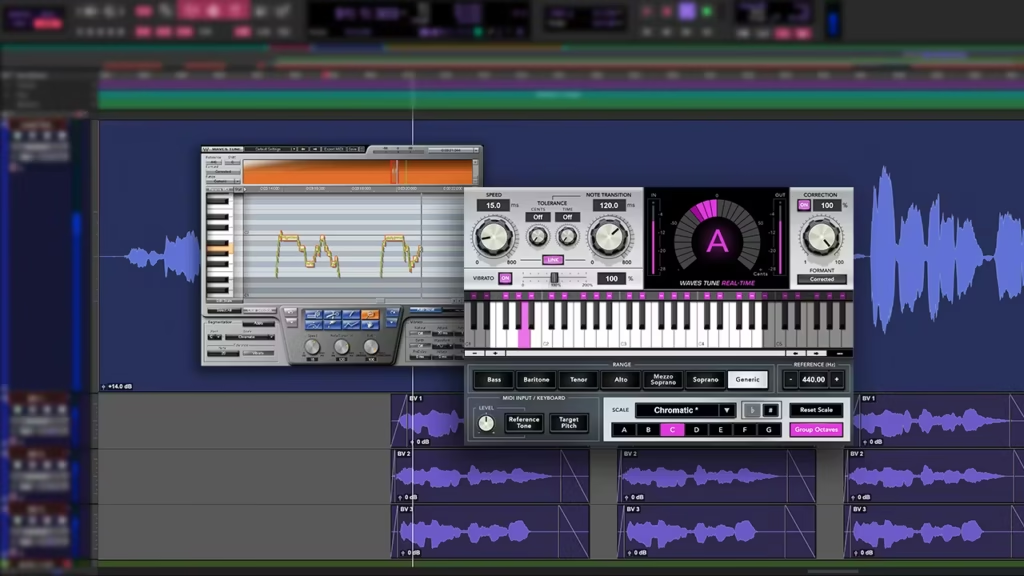

Pitch correction on an isolated vocal stem is a different process from pitch correction on a full mix. The stakes are higher and the technical challenges are more specific. When every other element has been removed from the track and the voice is alone, every pitch artifact is audible, every over-correction is unmistakable, and every decision about where to apply correction becomes a judgment with audible consequences.
Producers who apply the same pitch correction approach to extracted vocals as they do to full mix vocals consistently get worse results. The process needs to adapt to the specific challenges of correcting a stem.
Why Extracted Vocals Present Specific Pitch Correction Challenges?
Stem separation leaves artifacts. The current generation of AI stem splitters produces clean vocal stems from most well-recorded productions, but the extracted audio is not identical to a separately recorded vocal track. There may be residual harmonic information from the instrumentation that was closest to the vocal frequencies, slight phase artifacts from the separation process, and changes in the ambient/reverb tail of the vocal.
These artifacts affect pitch detection algorithms. A pitch detector analyzing an extracted vocal is working with audio that has been processed and may contain frequencies that don’t belong to the original vocal take. The result is pitch detection that’s less stable than detection on a clean original recording — and more likely to trigger correction on notes that are in tune rather than on those that aren’t.
The over-correction risk is real and specific: pitch correction that responds to artifacts in the extracted audio, not to actual intonation problems in the performance.
Pitch correction on extracted vocals that over-corrects sounds like an artifact, not a fix.
What a Clean Stem Provides That Full-Mix Processing Can’t?
Isolated Processing Without Bleed
Pitch correction on a full mix inevitably affects other elements that share frequency space with the vocal. An extracted vocal stem allows pitch processing to act exclusively on the vocal without affecting anything else. This isolation is the primary advantage of working from a stem rather than from the full mix.
More Accurate Reference for Intonation Decisions
When the vocal is alone, intonation decisions become clearer. A note that seems in tune within the full mix — where the instrumentation is harmonically supporting or masking the vocal pitch — may reveal itself as actually sharp or flat when isolated. A stem splitter that produces a clean vocal extraction allows the producer to make pitch decisions based on what the voice is actually doing, not what the surrounding production is suggesting.
Clean Input for Pitch Detection Algorithms
Removing reverb-heavy lead or backing vocal ambience before pitch correction improves detection accuracy. Some stem separation options provide a drier vocal output that gives pitch correction algorithms a cleaner input signal, which reduces false detection events and enables more targeted correction.
What are the best practices? for post-extraction pitch correction?
Listen to the extracted stem completely before applying any correction. Before touching pitch correction settings, listen to the full vocal stem. Identify the notes that are actually off-pitch, the phrases where intonation is consistent, and the moments where the extraction artifacts might look like pitch problems but aren’t. This listening assessment is the difference between targeted correction and algorithmic over-processing.
Set your pitch detection threshold conservatively. On extracted vocal stems, a conservative threshold — requiring more of a pitch deviation before triggering correction — prevents the algorithm from responding to extraction artifacts. Start with less detection sensitivity than you would use on a clean recording, then increase only if necessary for specific moments where intonation genuinely needs correction.
Use graphical/manual mode correction for the most audible phrases. For lead vocal phrases in the final chorus, the bridge climax, or any moment that will be heard clearly in the final mix, use graphical pitch correction mode rather than automatic. Identify the specific notes that need correction and adjust them individually. Automatic correction on extracted stems produces robotic results more reliably than manual correction.
Use an ai stem splitter to separate backing vocals from the lead before correcting lead intonation. If the stem includes both lead and backing vocals, separating them allows you to correct the lead independently from the harmonies. Correcting a mixed lead-and-harmony stem together often produces unnatural results because the pitch detection algorithm is averaging across multiple pitches simultaneously.
Preserve the natural intonation character of the performance. Pitch correction goals for extracted vocals should match the goals for any vocal correction: fix actual intonation problems while preserving the natural character and expressiveness of the performance. An extracted vocal that’s been pitch-corrected to robotic perfection sounds wrong — not because the pitch is wrong, but because the human quality has been removed. The correction should fix what’s off while leaving what’s right intact.
Frequently Asked Questions
Why is pitch correction on extracted vocal stems more difficult than on original recordings?
Stem separation leaves artifacts — residual harmonic information from adjacent instruments, slight phase artifacts from the separation process, and changes in the reverb tail. These artifacts affect pitch detection algorithms, which analyze audio that may contain frequencies that don’t belong to the original vocal take. The result is less stable pitch detection and a higher risk of triggering correction on notes that are actually in tune rather than on those that genuinely need fixing.
What pitch correction settings work best on extracted vocal stems?
Set the pitch detection threshold conservatively — requiring more pitch deviation before triggering correction — to prevent the algorithm from responding to extraction artifacts. Use graphical or manual correction mode for the most audible phrases rather than automatic correction. If the stem includes both lead and backing vocals, use a stem splitter to separate them before correcting; correcting a mixed lead-and-harmony stem together produces unnatural results because the pitch detection algorithm is averaging across multiple pitches simultaneously.
How do you tell the difference between a pitch problem and a separation artifact?
Listen to the full extracted vocal stem completely before applying any correction — identify which notes are actually off-pitch, which phrases have consistent intonation, and which moments look like pitch problems but are extraction artifacts. Compare against the full mix for any moment where the pitch assessment is unclear; the surrounding instrumentation sometimes reveals whether a note is sharp or flat in a way the isolated stem doesn’t. The goal is to fix actual intonation problems while preserving the natural intonation character of the performance.
The Extracted Vocal That Sounds Like a Recording
The measure of successful pitch correction on an extracted stem is that the result sounds like a well-performed, naturally recorded vocal — not like processed audio. Over-correction is immediately perceptible; under-correction may be acceptable depending on how the stem will be used.
Producers who develop the specific workflow for post-extraction pitch correction — understanding the artifact risks, calibrating detection thresholds accordingly, and working manually on the moments that matter most — produce corrected stems that can be used confidently in new productions, remixes, and arrangements.
The extracted vocal that sounds corrected but still human is the goal. It requires more attention than correcting a clean original recording — but the tools and techniques for achieving it are well established.